





|
Quantity
|
Out of stock
|
||
|
|
|||
|
|
|||
Shibari Ropes, Ties and Accessories for Rope Practice
Shibari is the practice of artistic and functional rope tying, combining technique with aesthetics, tactile sensation, attention to a partner and a deliberate sequence of movements. Unlike simply restraining someone, shibari places value on the process as well as the finished tie: the rhythm of handling the rope, the lines it creates on the body, tension control, the tied person’s responses and communication between partners.
For some people, shibari is part of a BDSM scene or a consensual exchange of control. For others, it is a physical and creative practice, a way to focus, or a method of creating a striking image for photography or performance. Whatever the context, the foundation remains the same: freely given consent, boundaries agreed in advance, ongoing communication and a responsible approach to risk.
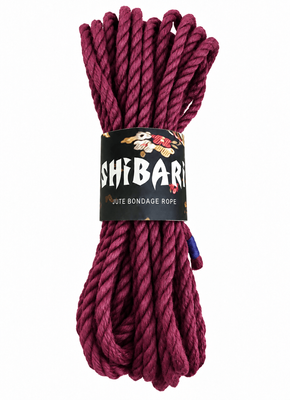
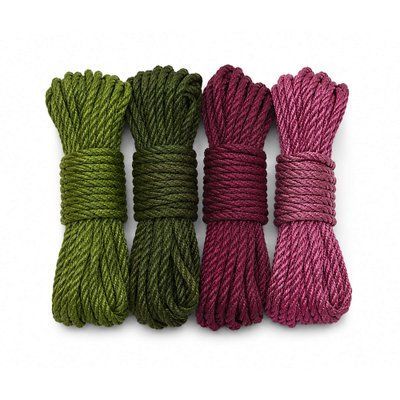
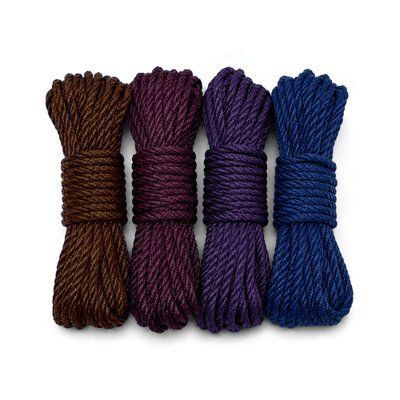
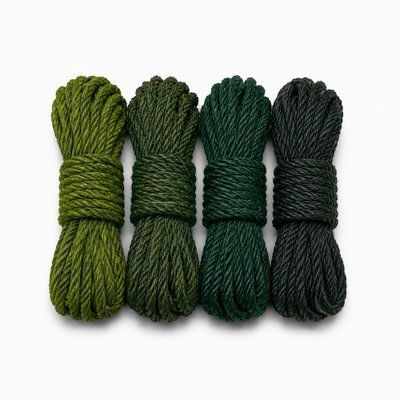
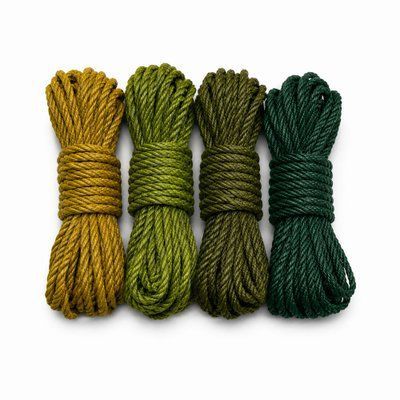
The Feral Feelings collection includes individual shibari ropes in different colors, ready-made rope sets and accessories for rope practice and care.
If you are new to shibari, visit the Feral Feelings Shibari Academy. It brings together step-by-step guides, diagrams for foundational ties and educational articles. You can also find information about BDSM, consent, choosing equipment, partner communication and scene preparation on the Feral Feelings blog.
What Is Shibari?
Shibari is a form of rope practice shaped by Japanese tradition that has since developed many contemporary interpretations.
It can include simple hand or leg restraints, geometric torso harnesses, decorative compositions, floor-based positions and more complex structures. Shibari is not simply a collection of knots. The way partners interact, control of tension, awareness of anatomical risks and the ability to adjust or remove a tie promptly are all essential parts of the practice.
The person tying is often called the rigger, rope top or tying partner. The person being tied may be called the model, rope bottom or bottom. These terms describe roles within a particular practice; they do not define a person’s overall status in a relationship. Participants can choose the language that feels comfortable and agree on how they want to interact.
Shibari vs. Kinbaku: What Is the Difference?
The words shibari and kinbaku are often used as related or interchangeable terms.
In Japanese, shibari broadly refers to tying or binding, while kinbaku is commonly associated with tighter or more intimate forms of binding. Contemporary international communities do not all draw the boundary between these concepts in the same way.
Some approaches use shibari as a broader term for aesthetic rope work and kinbaku for a more intense or erotic practice. Other schools make no clear distinction.
This terminology is not the deciding factor when choosing your first rope. It is more important to understand the specific technique, the properties of the material, the intended use and the risks involved.
The history of these terms, their Japanese context and the different ways they are interpreted are best explored in a dedicated article.
Why Do People Practice Shibari?
People’s reasons vary and often overlap:
-
Aesthetics — rope can emphasize the shape of the body and create geometry, symmetry or deliberate asymmetry.
-
Focus and ritual — a deliberate sequence of rope work can help participants slow down and concentrate on the process.
-
Trust between partners — the practice requires attention, honest feedback and respect for boundaries.
-
Physical sensation — fiber texture, pressure, warmth, the weight of the rope and changes in body position all contribute to the experience.
-
Role-play and BDSM — a tie may be part of consensual restraint, submission or an exchange of control.
-
Photography and performance — shibari can be used to create a visual image and explore the body in space.
None of these motivations is required. Shibari can be an intimate partner practice, a creative exploration, part of a performance or an art form without a sexual context.
Shibari Ropes
Rope determines more than the appearance of a tie. It also affects how the tie is formed and how it feels.
The material influences grip, the pace of tying, knot stability, pressure distribution, movement across the skin and after-use care. Color alone is therefore not enough when choosing shibari rope.
What Type of Rope Is Suitable for Shibari?
Both natural-fiber and synthetic ropes are used for shibari. Each material behaves differently, so no single option suits every technique or every person.
Jute Rope
Jute is lightweight, has a distinctive natural texture and offers good grip and friction against itself. Its relatively low stretch can make tension and rope placement feel more predictable.
Properly prepared jute is generally more comfortable than untreated utility rope, although its natural texture remains more noticeable on the skin than cotton.
Jute requires dry storage, regular inspection and material-appropriate care.
Hemp Rope
Hemp is another traditional natural-fiber option.
It is usually denser and heavier than jute, can become softer after proper preparation and often works well in frictions. Its characteristics vary considerably with the quality of the raw fiber, the twist, diameter and preparation method.
Cotton Rope
Cotton rope often feels softer and more approachable when someone first explores rope tying.
It is flexible, pleasant to the touch and can work well for decorative ties and uncomplicated floor-based practice. However, cotton can be heavier, compress more under load and behave differently in frictions than jute.
Whether it can be washed depends on the rope’s construction and the manufacturer’s care instructions.
Other Natural Fibers
Linen, bamboo and other natural or blended fibers are less common.
They can differ in smoothness, weight, strength, elasticity and care requirements. Before use, check the exact composition and intended purpose of the product.
Synthetic Rope
Synthetic ropes made from nylon, polyester or other fibers can be bright, smooth, moisture-resistant and easier to clean.
Some synthetic materials, however, are more slippery, stretch more or generate heat when moved quickly across the skin. Knots in smooth synthetic rope can behave differently from those in jute, so techniques should not be transferred mechanically from one material to another.
For body-based practice, use good-quality rope selected for the specific application—not an arbitrary utility cord or climbing rope whose behavior you have not evaluated.
Natural vs. Synthetic Shibari Rope
Natural fibers are valued for their characteristic texture, grip and behavior in frictions. Synthetic fibers offer a broad range of colors, moisture resistance and often simpler care.
The right choice depends on the technique, skin sensitivity, learning goals and personal preferences.
| Characteristic | Natural fibers | Synthetic fibers |
|---|---|---|
| Texture | Ranges from soft cotton to pronounced jute or hemp | More commonly smooth |
| Grip | Often higher; depends on the fiber and preparation | May be lower; some materials are more slippery |
| Flexibility | Depends on the fiber and preparation | Often flexible and may include stretch |
| Feel on skin | Natural texture; jute feels more pronounced, cotton is softer | Smoother surface, but rapid movement can generate heat |
| Care | Requires dry storage and material-appropriate cleaning | Often easier to clean, depending on the material |
| Durability | Depends on quality, preparation, moisture and use | Also affected by fiber type, friction, heat and UV exposure |
| Typical uses | Jute and hemp for characteristic texture and frictions; cotton for softer floor and decorative work | Decorative, training and other applications depending on the rope’s properties |
Material alone does not make a practice safe. Rope quality and condition, technique, wrap placement, tension, duration and the participants’ experience all matter.
What Diameter Should Shibari Rope Be?
Diameter affects how rope sits in the hand, forms knots and distributes pressure across the body.
4 mm (about 0.16 in) rope creates finer lines and compact knots. It can be useful for decorative details or smaller areas, but it concentrates pressure over less surface area and requires precise control.
5–6 mm (about 0.20–0.24 in) is a common format for many types of shibari. It is comfortable to handle, reads clearly in a tie and creates a wider contact line than thinner rope.
Feral Feelings jute ropes and rope sets use a 6 mm diameter.
Thicker rope creates bulkier knots, requires more length for the same structure and may be less convenient for fine details.
Diameter does not automatically determine difficulty or safety. What matters is whether you can control the rope comfortably within the technique you are using.
How Long Should Shibari Rope Be?
The required length depends on the tie, body measurements, number of wraps and how the structure is finished.
Short lengths can be useful for practicing individual knots, completing a tie or working on a small area.
A rope around 8 m (26 ft) long is a practical length for many basic and combined floor ties.
Sets containing several ropes are useful for torso and hip harnesses, longer ties and compositions in which one rope is extended with another.
Beginners do not need to buy a large set immediately. You can start with one or two ropes, become familiar with the material and then decide which quantity, length and colors suit your practice.
How to Choose Shibari Rope
The right rope should match its intended use, feel comfortable in the hands and on the body, have a predictable texture and come with clear care instructions.
Consider several characteristics together before buying.
Decide What You Will Use the Rope For
For knot practice, manageable handling and understandable grip are important.
For foundational floor ties, consider comfort on the skin, suitable length and the ability to lay wraps evenly.
For decorative compositions, color, line thickness and how the rope appears on camera also matter.
Complex structures and suspension have very different requirements for technique, materials, attachment points and training. Never select equipment for these practices merely because it is labeled “shibari rope.”
Consider the Material
Think about what matters most to you: softness, natural texture, low weight, grip, color or ease of care.
If the model’s skin is sensitive to coarse fibers, begin with a softer surface and shorter sessions.
If you want to learn traditional frictions, prepared jute may be an interesting choice because of its texture and behavior.
Always check the exact composition. Words such as “natural” or “soft” do not, by themselves, describe the fiber quality, twist or preparation method.
Check the Diameter and Length
For a first rope, 5–6 mm (about 0.20–0.24 in) in diameter and approximately 8 m (26 ft) in length is often a practical reference point.
This is not a universal rule: a particular technique may require another length or several ropes.
Compare the exact specifications on the product page. A photograph does not always show the true diameter, weight or density of the twist.
Evaluate the Texture and Finish
Good-quality rope intended for body contact should not contain sharp inclusions, damaged areas or coarse projections that could injure the skin.
Preparation matters for natural rope. This may include softening the rope, evening its texture, removing excess short fibers, stabilizing its length and neatly finishing the ends.
If a rope is sold ready to use, its product description should explain what preparation the manufacturer has performed.
Inspect the Rope Before Use
Before every session, run the entire length of rope through your hands.
Look for:
-
localized thinning;
-
excessive fuzzing;
-
tears or broken strands;
-
hard or misshapen areas;
-
stains;
-
a damp or moldy smell;
-
damaged ends;
-
changes in the rope’s behavior that were not present before.
If you are unsure about a rope’s condition or history, do not use it in a structure where material failure would create additional risk.
Regular inspection should be combined with proper cleaning, drying and conditioning where appropriate.
Shibari for Beginners
A first shibari experience should be understandable and controlled.
There is no need to recreate a complex composition from a photograph immediately. The first goal is to learn how to handle the rope, follow its path across the body, control tension and receive continuous feedback from your partner.
How Should You Start Learning Shibari?
Begin with:
-
rope construction;
-
basic terminology;
-
consent principles;
-
stop signals;
-
simple knots and frictions;
-
tension control;
-
an understanding of vulnerable areas of the body.
You can initially practice the movements without restraining a partner—on your own leg, a pillow or another neutral object.
First partner ties are best performed on a stable surface and in a position from which the person can change posture or be released quickly.
Which Rope Is Best for a Beginner?
A good first rope has a clear, predictable texture, enough flexibility, neatly finished ends and a length that is comfortable to handle.
For many beginners, a practical reference point is 5–6 mm (about 0.20–0.24 in) in diameter and around 8 m (26 ft) in length.
Soft cotton can be comfortable for simple floor-based and decorative ties. Prepared jute suits those who want to experience the characteristic texture and grip of a traditional shibari rope.
Where Can You Learn Shibari?
The Feral Feelings Shibari Academy brings together step-by-step instructions, diagrams, foundational techniques and materials for progressive learning.
You can begin with the HOBBLE basic hand tie and, after learning the fundamentals, move on to torso work such as the Munenawa chest harness.
Online resources can clarify the sequence of a technique, but they do not replace in-person instruction for higher-risk practices.
Suspension, intensive loading and complex positions should be studied under the guidance of a competent instructor.
Types of Shibari Ties
Shibari ties differ not only in pattern, but also in purpose, body position and level of risk.
The categories below provide an introduction to the subject, but they do not replace complete technical instruction.
Foundational Ties
Foundational ties use relatively simple structures in which the rope path is easy to follow and tension can be monitored.
They help students learn to place parallel wraps, build frictions, extend a rope and finish a tie without uncontrolled tightening.
Hand and Arm Ties
Ties can connect the wrists, secure the arms to the torso or form a separate structure around the forearms.
Arm position substantially affects stress on the shoulders, elbows, wrists and nerves. Even a visually simple restraint therefore requires continuous monitoring.
For an accessible introduction, see the HOBBLE tutorial in the Shibari Academy.
Leg Ties
Rope can be placed around the ankles, lower legs or thighs, connect the legs or hold a limb in a bent position.
Avoid placing knots directly on joints or creating sharp pressure points. Check sensation and mobility in the limbs regularly throughout the practice.
Torso Harnesses
Chest, torso, waist and hip ties create larger geometric structures.
They may be decorative or form a foundation for additional elements. Torso work requires awareness of breathing, shoulder mobility and areas where nerves and blood vessels run.
One example of foundational torso work is the Munenawa chest harness available in the Shibari Academy.
Decorative Ties
Decorative shibari emphasizes composition, symmetry, color and the relationship between rope, body and clothing.
These ties are often created for photography, performances and styled looks.
A decorative purpose does not remove physical risk: the rope still applies pressure and can shift as the model moves.
Floor Ties and Suspension
In floor-based practice, the body remains supported by a stable surface.
In partial suspension, some body weight may be transferred to the rope. In full suspension, the body loses contact with the supporting surface.
Moving into load-bearing work significantly increases the demands on technique, materials, attachment points, emergency planning and the rigger’s skills.
Find detailed, step-by-step tie diagrams in the Shibari Academy. Beginners should focus on simple floor-based techniques and should not attempt suspension based only on a photograph or short video.
Shibari Safety
Shibari involves physical risk.
Rope can compress nerves and blood vessels, restrict movement, affect breathing and create dangerous forces in a fall.
Participants are responsible for understanding these risks, reducing them and being ready to stop the practice immediately.
Keep blunt-tip medical scissors (EMT shears) or another tool capable of quickly cutting the specific rope close at hand.
Keep it in a known, readily accessible place throughout the session.
Saving the rope is never more important than releasing a person promptly.
Consent and Communication
Before beginning, discuss:
-
the desired type of practice;
-
physical limitations;
-
injuries and sensitive areas;
-
an acceptable level of restraint;
-
stop signals;
-
what to do if discomfort occurs;
-
how the person will be released quickly.
Agree on a safeword and a simple nonverbal stop signal in case speaking becomes difficult.
Consent must be freely given, specific, informed and ongoing throughout the practice. It can be withdrawn at any time.
Silence, freezing or a lack of resistance does not mean consent.
Why Is Tension Control Important?
A tie that is too loose can shift and create unpredictable pressure points.
A tie that is too tight can compress tissue, nerves and blood vessels or interfere with breathing and movement.
Tension must suit the particular structure and be monitored continuously.
Do not rely only on whether you can slide fingers beneath the rope. Observe:
-
skin color;
-
skin temperature;
-
finger movement;
-
sensation;
-
breathing;
-
speech;
-
the partner’s overall condition.
Recheck the tie after every change in body position because pressure may be redistributed.
Vulnerable Areas of the Body
Take particular care around areas where nerves and blood vessels run close to the surface, around joints and anywhere pressure may affect the airway.
Never place self-tightening loops around the neck or allow pressure that interferes with breathing or swallowing.
Arms held behind the back, bent limbs and prolonged immobility can create additional strain even when the rope is not especially tight.
Every person’s anatomy and mobility are different, so a ready-made diagram cannot replace observation of the individual being tied.
When Should You Stop Immediately?
Loosen or remove the tie without delay if the person experiences:
-
numbness or loss of sensation;
-
tingling or burning;
-
an electric-shock sensation;
-
unusual weakness;
-
an inability to move fingers or a limb normally;
-
a pronounced change in skin color or temperature;
-
sharp, severe or increasing pain;
-
dizziness;
-
nausea;
-
confusion;
-
a panic response;
-
difficulty breathing, swallowing or speaking;
-
any other unusual symptom that causes concern.
Do not try to “push through” numbness or tingling.
If symptoms persist after release, become worse or are accompanied by weakness, seek medical attention.
Suspension and Complex Ties
Partial and full suspension are considerably more demanding forms of rope practice.
An error in the structure, damaged rope, an unreliable attachment point or loss of balance can create sudden loading, a fall and serious injury.
Suspension requires in-person instruction, the ability to lower someone quickly and safely, anatomical knowledge, appropriate equipment, a verified suspension point and an emergency plan prepared in advance.
Do not use any rope, carabiner, connector or anchor to support body weight unless the manufacturer explicitly specifies that purpose and provides the relevant ratings.
How to Care for Shibari Rope
Care requirements depend on the material and its initial preparation.
Jute, hemp, cotton and synthetic fibers should not all be cleaned in the same way. Always begin with the manufacturer’s instructions for the specific rope.
How Should Shibari Rope Be Cleaned?
After an ordinary session, remove surface dust and lint with a clean, dry cloth or another method recommended by the manufacturer.
Natural jute and hemp ropes should not be soaked or washed unless necessary. Water can alter the twist, stiffness, length and condition of the fibers, while incomplete drying can lead to unpleasant odors or mold.
Some cotton and synthetic ropes can be hand- or machine-washed, but only when their manufacturer allows it.
After contact with bodily fluids, or when adequate cleaning is not possible, retire the rope from shared use or replace it.
How Should Shibari Rope Be Dried?
If a rope becomes wet, straighten it and allow it to dry completely in a well-ventilated space.
Never store even slightly damp rope in a closed bag or airtight container.
Avoid direct heat, open flames and prolonged, intense sunlight.
Before using the rope again, inspect its full length and make sure no moisture remains inside the twist.
How Should Shibari Rope Be Stored?
Store clean, dry ropes:
-
separately from sharp objects;
-
away from household chemicals;
-
in a dry place;
-
away from continuous exposure to moisture;
-
away from sources of intense heat.
Ropes can be stored in loose coils or other storage methods that avoid excessively tight bends.
If you own ropes made from different materials or in different lengths—or keep some for personal use—label them to avoid mixing the sets.
How Should You Inspect Rope Before Use?
During inspection, look for:
-
abrasion and localized thinning;
-
excessive fuzzing;
-
shedding fibers;
-
cuts and tears;
-
damage to the twist;
-
hard, flattened or misshapen areas;
-
contamination;
-
a damp or moldy smell;
-
damaged end finishes;
-
unusual changes in length, elasticity or behavior.
It is better to replace a rope with suspicious damage.
You may keep a retired length for practicing knots on an inanimate object, but clearly mark it as unsuitable for body-based or load-bearing practice.
Restoring and Conditioning Natural-Fiber Rope
Natural fibers change gradually with use. The surface may become polished and the rope softer, while poor storage or excessive cleaning can cause it to dry out and become increasingly fuzzy.
Specialized conditioning products can help maintain the desired texture and flexibility.
Choose oil or wax according to the type of fiber and its original preparation. Too much product can reduce grip, leave the surface greasy, attract dirt or change the rope’s behavior in frictions.
Do not use arbitrary cooking oils or products with an unknown composition.
If a ready-to-use rope has already completed a full preparation cycle, it does not automatically need further treatment immediately after purchase.
A separate article can cover rope restoration, conditioning and the use of oil and wax in more detail.
Internal link: Add a link here once the detailed rope restoration and care guide is published.
Shibari Accessories
Accessories can help organize ropes, finish their ends, connect individual elements or care for natural fibers.
Visual similarity does not guarantee equal functionality: a decorative carabiner and a rated load-bearing component are different products.
Carabiners and Connectors
Carabiners, rings and connectors may be used in floor-based compositions, to attach compatible accessories or to organize individual lines.
Before use, check the material, closing mechanism, absence of sharp edges and the manufacturer’s stated purpose.
Any structure that may take a person’s weight requires components with known ratings and compatibility across the entire system.
Household or decorative hardware is not suitable for suspension simply because it appears strong.
Rope Ends and Storage Accessories
Rope ends may be stitched, knotted or finished in another way.
A neat end finish should have no sharp details, catch on the skin or interfere as the rope passes beneath wraps.
Bags, straps and organizers help keep sets separate and make it easier to find a particular length or color.
Rope Care Products
Special oils, wax blends and other conditioning products may be used for natural-fiber ropes.
Their purpose is to maintain appropriate texture, flexibility and manageability—not to make the surface as slippery as possible.
The product must be compatible with the specific fiber and dye. Before treating a full set, check the manufacturer’s instructions and test a small amount on a separate section or spare length.
How to Choose Shibari Accessories
Start with a specific purpose:
-
storage;
-
care;
-
decorative connection;
-
floor-based restraint;
-
rope organization;
-
load-bearing use.
Check the material, shape, mechanism, compatibility with the rope diameter and stated ratings.
If an accessory does not have a clear description or known purpose, do not use it to support a person’s weight.
Shibari and BDSM
Shibari can be part of BDSM, but the two terms are not synonymous.
Within a BDSM scene, rope may emphasize a consensual exchange of control, create a sense of restraint, support role-play or be combined with other accessories.
People also practice shibari without dominance, pain or a sexual context—as a partnered physical practice, art form, performance or way to create a photographic image.
The meaning comes from the participants’ agreement, not from the rope itself.
Using shibari within BDSM does not override the principles of consent. Restricted movement does not remove a person’s right to stop an interaction, and any transfer of control must remain negotiated, specific and revocable.
Shibari as Art and Aesthetic Practice
The visual language of shibari is built from lines, repetitions, directions and intersections.
Parallel wraps can emphasize the body’s symmetry, diagonals can create movement, and the contrast between the color of the rope and the skin or clothing can establish a focal point.
Texture is also part of the image.
Jute creates a natural matte surface and pronounced relief, cotton produces softer lines, and colored ropes help establish the mood of a photograph.
In photography, the finished tie is not the only meaningful element. The rigger’s hands, the free end of the rope, the process of building a friction and changes in position can all become part of the composition.
Contemporary shibari is not limited to copying a single canon. Practitioners combine Japanese technical and aesthetic influences with fashion, dance, theater, photography and their own physical language.
Respect for historical context can coexist with creative reinterpretation when consent, safety and respect for every participant’s role remain central.
How to Start Practicing Shibari
Step 1. Choose Good-Quality Rope
For your first experience, choose prepared rope with a clearly stated composition, diameter, length and care instructions.
Inspect the entire surface and make sure the ends are undamaged.
Step 2. Learn Foundational Knots and Frictions
Learn to create knots and frictions that stay in place without tightening uncontrollably.
Practice the movements without restraining a partner at first so you can focus on tension, direction and rope handling.
Step 3. Begin With Simple Floor Ties
Choose a stable position, a short duration and a structure that is easy to loosen or remove.
Do not begin with complex transitions, suspension or a structure copied from a photograph that offers no technical explanation.
Step 4. Learn to Control Tension
Work slowly, lay each wrap flat and check sensation after every change.
If you do not understand the structure, stop and return to the educational material.
Step 5. Study the Safety Principles
Agree on signals, prepare an emergency cutting tool and learn the main risks involving nerves, blood vessels, breathing and body position.
Both partners should recognize the signs that mean the rope must be removed immediately.
Step 6. Progress Gradually
Add a new element only after the fundamentals have become predictable.
The complexity of a pattern does not equal the quality of the practice. A simple, attentive tie can provide more sensation and trust than a structure the participants cannot confidently control.
Step 7. Learn With the Shibari Academy
The Feral Feelings Shibari Academy supports progressive learning—from foundational hand ties to torso harnesses and decorative techniques.
Before practicing, read the full tutorial together with all warnings. Only then should you begin following the steps.
Visit the Shibari Academy to choose your first lesson and learn rope work step by step.
Why Choose Feral Feelings Shibari Ropes?
Feral Feelings is a Ukrainian manufacturer of BDSM accessories with its own workshop.
The collection includes individual jute and cotton ropes as well as ready-made colored shibari rope sets. Exact specifications vary by model and are listed on each product page.
The standard format for Feral Feelings jute rope is 8 m (26 ft) long with a 6 mm (0.24 in) diameter.
This format is suitable for learning, foundational floor ties, decorative compositions and structures that connect several ropes.
Sets of four 8 m (26 ft) ropes allow you to work on torso harnesses and more elaborate visual compositions using ropes with the same diameter and preparation.
How Are Feral Feelings Jute Ropes Prepared?
Feral Feelings jute ropes undergo a complete manual preparation process.
Depending on the model, it includes:
-
softening the fibers;
-
dyeing with colorfast dyes;
-
keeping the rope under tension for more than 40 hours to reduce subsequent changes in length;
-
singeing away excess short fibers;
-
conditioning with a specialized oil;
-
neatly stitching the ends without large, hard knots.
The ropes arrive ready to use and do not require initial preparation at home.
The natural texture of jute retains its characteristic grip, while the 6 mm (0.24 in) diameter produces distinct lines in a practical handling format.
Rope labels include a QR code linking to Feral Feelings educational materials.
This gives the customer both a product and a clear next step: the Shibari Academy with its instructions and diagrams.
Before ordering, choose the material, color and quantity you need.
One standard rope is useful for exploring the texture and practicing individual foundational techniques. A ready-made set is better suited to longer ties and a consistent color composition.
For any load-bearing practice, always check the stated purpose of the individual product. The label “shibari rope” does not, by itself, mean that a rope is intended for suspension.
Frequently Asked Questions About Shibari and Rope
What Is the Best Rope for Shibari?
There is no universally best material.
Prepared jute is valued for its low weight, pronounced texture and grip. Cotton is softer and can be comfortable for early floor-based and decorative ties. Hemp has its own balance of texture, weight and behavior, while synthetic rope can be smoother and easier to care for.
Choose rope according to the technique, how it feels on the skin, the quality of its preparation and the manufacturer’s recommendations.
What Diameter Should Shibari Rope Be?
A common diameter for many practices is 5–6 mm (about 0.20–0.24 in).
This format is convenient to handle and creates visible lines within a tie.
Rope with a 4 mm (0.16 in) diameter makes more compact knots, but concentrates pressure over a smaller area and requires more precise control.
Feral Feelings jute ropes have a 6 mm (0.24 in) diameter.
How Long Should Rope Be for Shibari Ties?
Many foundational techniques use ropes approximately 8 m (26 ft) long.
Shorter lengths may be convenient for small restraints or individual details, while torso harnesses and more complex compositions often require several ropes.
Beginners do not have to purchase a large set immediately. Start with one or two ropes and expand your kit after becoming familiar with the techniques.
Can You Use Synthetic Rope for Shibari?
Yes, provided it is selected for body-based practice and suits the specific technique.
Synthetic fibers are often smoother, may stretch and can hold knots differently. Moving some synthetic ropes quickly over the skin can generate intense friction and heat.
Do not use an arbitrary household or climbing cord without understanding its properties.
Is Shibari Suitable for Beginners?
Yes, when it begins with education, simple floor ties, short sessions and continuous communication.
The first subjects to learn are consent, stop signals, tension control, vulnerable areas of the body and rapid release.
Suspension and complex positions should not be attempted independently without appropriate training.
Which Shibari Ties Should a Beginner Learn First?
Begin with simple structures in a stable position: a foundational hand tie, uncomplicated work with the legs or a decorative torso harness that does not support body weight.
The diagram should be clear and the structure easy to loosen or remove quickly.
Step-by-step examples are available in the Feral Feelings Shibari Academy.
Can Shibari Rope Be Used for Suspension?
Not every rope can.
Being sold as “shibari rope” is not enough to qualify a product for suspension. You must know its intended purpose, condition, specifications and compatibility with the entire system.
A verified suspension point, suitable hardware, an emergency plan and specialized skills are also essential.
Beginners should not attempt to learn suspension solely from photographs or short videos.
How Should You Care for Shibari Rope?
After use, inspect the full length, remove surface dirt in a way appropriate to the material and let the rope dry completely before storing it.
Keep rope in a dry, ventilated place away from prolonged moisture, intense heat and sharp objects.
Do not wash jute or hemp rope unless the manufacturer expressly recommends it. The rules may differ for cotton and synthetic rope.
Do Shibari Ropes Need Oil or Wax?
Not always.
If a natural-fiber rope has already undergone a complete preparation cycle and is sold ready to use, treating it again immediately after purchase may alter its texture and grip.
Conditioning may be useful when appropriate for the particular fiber or when the rope has become drier over time.
Use a compatible product sparingly and follow the manufacturer’s instructions.
How Do You Know When to Replace Shibari Rope?
Replace the rope if you find:
-
tears;
-
localized thinning;
-
damaged twist;
-
hard, misshapen areas;
-
mold;
-
a persistent unusual odor;
-
substantial damage to the ends.
An unknown history is also a reason not to use rope in higher-risk structures.
If in doubt, retire the rope from body-based practice.
Start Exploring Shibari
If you are new to shibari, begin with well-prepared rope, foundational safety principles and simple floor-based ties.
Do not rush into complex structures. Progressive learning helps you understand the material’s texture, tension control, the body’s responses and your own preferences.
Choose one rope or a small set from this category, then continue with the Feral Feelings Shibari Academy.
There you can find step-by-step lessons and progress from individual knots to complete ties in a clear sequence.
For additional information about BDSM, consent, equipment and partner communication, read the Feral Feelings blog.
To buy shibari rope or a shibari rope set, compare Feral Feelings materials, colors and set options, and begin your practice with education, attention and respect for your partner.