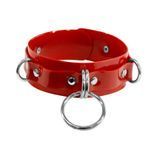
A BDSM collar can be practical equipment, a fashion accessory, a private ritual, or a visible symbol of a relationship. For some people, putting on a collar marks the beginning of a scene. For others, it represents trust, commitment, or an agreed Dominant/submissive dynamic. It can also be worn simply because the wearer enjoys the look and feel of it.
There is no single meaning that applies to every BDSM collar. Its significance depends on the people using it, the purpose they choose for it, and the agreements they make together. Wearing a collar does not automatically communicate consent, availability, ownership, or permission for anyone else to touch the wearer.
For a beginner, the best BDSM collar is usually not the most restrictive or elaborate design. A good first collar should fit correctly, feel comfortable against the skin, have smooth edges, offer enough adjustment, and suit the way it will actually be used. A decorative choker, soft leather play collar, and reinforced collar with a leash attachment serve different purposes, even when they look similar in photographs.
This guide explains the main types of BDSM collars, what they are designed for, and how to choose a first collar based on comfort, function, and experience.
What Is the Best BDSM Collar for a Beginner?
For most beginners, a soft, adjustable leather collar with smooth finished edges and a simple buckle is one of the most versatile options. It can provide the visual and psychological experience of wearing a collar without the rigidity, restricted movement, or complicated closure associated with more specialised designs.
When choosing a first collar, look for one that:
- has a clearly stated size range;
- can be adjusted without putting pressure on the throat;
- lies smoothly against the neck;
- has carefully finished edges;
- can be removed quickly when necessary;
- uses hardware appropriate for its intended purpose;
- is neither so narrow that it digs into the skin nor so wide that it interferes with normal movement.
If you want to attach a leash, choose a functional play collar with a securely mounted D-ring or O-ring and reinforced stress points. If you mainly want the appearance of a BDSM collar, a lightweight decorative choker may be more comfortable and less expensive.
Do not assume that every ring is load-bearing. Decorative hardware may be designed for appearance rather than pulling or connection.
A posture collar, rigid metal collar, or permanently locking design is rarely the simplest first purchase. These styles can be meaningful and visually striking, but they require more precise sizing, clearer expectations, and greater awareness of movement and removal.
What Does a BDSM Collar Mean?
The meaning of a BDSM collar is personal and should be discussed rather than assumed. Within BDSM communities, the same design can carry very different meanings for different wearers.
A Symbol of a D/s Relationship
Some partners use a collar to represent a consensual Dominant/submissive relationship. The collar may be worn only in private, during BDSM events, or every day. Some people use terms such as “collared” or “owned” within their agreed dynamic, while others prefer language centred on partnership, devotion, or commitment.
The symbolism belongs to the people involved. A collar does not give a Dominant unlimited authority, replace ongoing consent, or cancel previously agreed boundaries. It also does not give strangers permission to approach, touch, or direct the wearer.
A Sign of Commitment
In some relationships, a collar carries emotional importance similar to a promise ring, engagement ring, or wedding ring. Partners may mark the occasion with a private exchange or a formal collaring ceremony.
The design does not have to be expensive or elaborate. Its importance comes from the promises and expectations attached to it. Before exchanging a commitment collar, both partners should discuss what wearing it means, when it will be worn, and what would happen if the relationship or dynamic changed.
A Ritual for Entering and Ending a Scene
A play collar can create a clear psychological transition. Putting it on may signal that a negotiated scene is beginning, while removing it can mark the return to everyday interaction and aftercare.
For some couples, this ritual helps distinguish role-play or power exchange from the rest of their relationship.
A Fashion or Personal Style Choice
Not every BDSM-style collar represents a relationship. Some people wear leather chokers, O-ring collars, or studded designs simply because they enjoy the aesthetic.
A person can wear a collar while single, without identifying as submissive, and without inviting interaction.
The safest rule is simple: never infer consent, relationship status, or availability from jewellery. If the meaning matters, ask respectfully.
Types of BDSM Collars and Their Purpose
BDSM collars can be grouped according to what they are designed to do. Some categories overlap, but understanding their primary purpose can help you avoid choosing a beautiful collar that does not suit the intended use.
Play Collars
A play collar is designed to be worn during BDSM scenes. It is often made from leather and may include a D-ring or O-ring for attaching a leash or creating a visual focal point.
Play collars range from soft, simple bands to wider reinforced models. For beginners, comfort and easy removal are more important than heavy hardware.
A first play collar should allow normal breathing, swallowing, communication, and comfortable head movement.
Best for:
- first BDSM scenes;
- creating a clear start-and-end ritual;
- wearing with cuffs, harnesses, or lingerie;
- controlled leash play when the collar is specifically designed for it.
Always check whether the attachment ring is functional before connecting anything to it. A decorative ring does not automatically make a collar suitable for pulling or guided movement.
D-Ring Collars
A D-ring sits relatively flat against the collar and provides an attachment point for a compatible leash, chain, or connector. Its shape can help keep the connection oriented in a predictable direction.
A D-ring collar can be a practical beginner option when the ring and the surrounding material are properly reinforced.
The important detail is not the ring alone but how it is attached to the collar.
Best for:
- a first functional collar;
- compatible leash use;
- controlled, guided movement;
- people who prefer hardware that sits relatively flat.
O-Ring Collars
An O-ring creates a classic, immediately recognisable BDSM aesthetic. Because the ring can rotate, it can accept connections from different directions.
Some O-rings are functional, while others are purely decorative.
O-ring collars can work well for beginners, but large or heavy rings may move, tap against the body, or pull the front of the collar downward. For regular wear, consider the weight of the hardware as well as its appearance.
Best for:
- a classic BDSM look;
- compatible chains or connectors;
- scenes where a central attachment point is useful;
- people who want a visually distinctive collar.
Day Collars
A day collar is designed to be worn in ordinary settings. It may look like a slim leather choker, necklace, chain, pendant, or other piece of jewellery. Its meaning may be known only to the wearer and their partner.
Because a day collar may be worn for many hours, low weight, smooth surfaces, and unrestricted movement become especially important. A design that feels comfortable for a thirty-minute scene may become irritating during a full working day.
Best for:
- discreet daily symbolism;
- work, travel, and social settings;
- a private reminder of a relationship dynamic;
- coordinating a collar with everyday clothing.
A day collar is not necessarily suitable for leash use. Its discreet construction may intentionally be lightweight.
Decorative Collars and BDSM Chokers
Decorative collars focus primarily on visual impact. They may feature studs, spikes, chains, crystals, contrasting leather, nameplates, or elaborate metalwork.
Some are designed for photos, parties, and outfits rather than functional play.
This can be an excellent beginner category when the goal is styling, exploration, or simply enjoying the aesthetic. Check for rough edges, pinching hardware, and decorative elements that could catch on hair or clothing.
Best for:
- BDSM-inspired fashion;
- photoshoots and events;
- completing a lingerie, harness, or leather look;
- exploring collar aesthetics without leash use.
Treat decorative hardware as decorative unless the product description specifically states otherwise.
Locking Collars
A locking collar closes with a padlock, specialised clasp, or lockable buckle. It may represent commitment, restricted removal, or a shared ritual between partners.
Some designs are intended for temporary scenes, while others are made for longer wear.
Locking collars require a clear removal plan. The key or release method must remain accessible, and the wearer should never be left unable to remove the collar if discomfort, swelling, or another problem develops.
Best for:
- established partners with clear agreements;
- symbolic exchanges and collaring rituals;
- experienced users who understand the closure and removal mechanism.
For most beginners, a standard buckle is simpler and easier to manage.
Posture Collars
A posture collar is taller and more rigid than a standard play collar. It can limit how far the wearer can tilt or turn the head and may create a visually elongated neck position.
Because fit and anatomy matter greatly, posture collars are not usually recommended as a first collar.
They should never interfere with breathing or swallowing. Remove the collar immediately if the wearer experiences numbness, dizziness, sharp pain, jaw discomfort, breathing difficulty, or difficulty communicating.
Best for:
- short, carefully monitored scenes;
- experienced users who understand restricted movement;
- specific visual or protocol-focused scenarios.
Multi-Attachment Collars
Some collars include several rings or reinforced attachment points for compatible cuffs, chains, or straps. These designs can create a particular position or visual arrangement, but they require more planning than a simple play collar.
Any connection can change the forces placed on the neck. A collar should never be used as a suspension point or to support body weight.
Avoid any setup where a fall, loss of balance, or sudden movement could tighten or jerk the neck.
Best for:
- planned scenes using compatible equipment;
- experienced partners who understand positioning and tension;
- controlled connections that do not place body weight on the neck.
Symbolic, Protection, and Online Collars
Some BDSM communities use terms such as protection collar, consideration collar, training collar, or online collar. These labels describe an agreement or stage of a relationship rather than a particular physical product.
For example, an online collar may be represented by a profile notation, digital symbol, or piece of jewellery in a long-distance dynamic. A protection collar may communicate a specific relationship agreement between partners.
These terms are not interpreted identically in every community.
If you use one of these labels, define its meaning with the people involved. A title should never replace a direct conversation about consent, exclusivity, expectations, and boundaries.
Beginner BDSM Collar Comparison
| Collar type | Main purpose | Beginner-friendly? | Leash compatible? | Suitable for long wear? |
|---|---|---|---|---|
| Soft leather play collar | Scenes and rituals | Yes | Sometimes; check construction | Usually limited wear |
| Reinforced D-ring collar | Guided leash play | Yes, with care | Yes, if designed for it | Depends on weight and fit |
| O-ring collar | Play and visual impact | Often | Sometimes; check construction | Depends on ring weight |
| Day collar | Discreet daily symbolism | Yes | Usually no | Yes, if lightweight |
| Decorative choker | Fashion and styling | Yes | Usually no | Depends on materials and fit |
| Locking collar | Commitment or controlled removal | Better for established users | Model-dependent | Only with a safe removal plan |
| Posture collar | Restricted head movement | Usually no | Not the main purpose | No; short monitored use |
| Multi-attachment collar | Connections to other equipment | Better for experienced users | Model-dependent | Usually for scenes only |
Best Beginner BDSM Collars by Intended Use
There is no universal “best” BDSM collar. A model that works well for everyday symbolism may be unsuitable for leash play, while a functional scene collar may be unnecessarily heavy for daily wear.
The best starting point is the experience you want to create.
Best All-Round First Collar: A Soft Adjustable Leather Collar
A flexible leather collar with a simple buckle, moderate width, and smooth edges is one of the most versatile choices for a first collar.
It can work as part of an outfit, a scene ritual, or a light play setup without committing the wearer to a rigid shape or complicated locking system.
Adjustment is particularly useful for beginners because even a small change in position can affect how the buckle, edge, and front hardware feel.
Best First Collar for Leash Play: A Reinforced D-Ring Collar
If you specifically want to use a leash, look for a functional D-ring collar designed for that purpose.
The D-ring can provide a convenient attachment point, but the ring itself is only one part of the construction. Check how it is mounted and whether the surrounding leather or material is reinforced.
Start with slow, controlled guidance. Never jerk the leash, use the collar to catch a falling person, suspend the wearer, or support body weight.
Best Collar for a Classic BDSM Look: An O-Ring Collar
An O-ring collar provides a distinctive BDSM aesthetic and pairs naturally with leather cuffs, harnesses, and compatible chains.
For a first O-ring collar, prioritise a smooth interior and check whether the ring is functional or decorative. If the hardware is particularly large or heavy, consider reserving the collar for shorter scenes or outfits.
Best Collar for Everyday Symbolism: A Lightweight Day Collar
A day collar is a better choice when the collar will be worn to work, while travelling, or in ordinary social settings.
It should feel more like comfortable jewellery than scene equipment: lightweight, discreet, and free from hardware that repeatedly knocks against the body.
A slim leather choker, subtle ring detail, chain, or pendant can all work depending on personal style and the meaning attached to the piece.
Best Collar for Styling and Photos: A Decorative BDSM Choker
If the goal is visual exploration rather than leash attachment, a decorative choker gives beginners more freedom to focus on colour, hardware, and styling.
Studs, chains, contrasting leather, and statement rings can complement lingerie, a harness, or an everyday alternative look.
Treat decorative elements as decorative unless the product description specifically states otherwise.
Collars Most Beginners Should Leave for Later
Posture collars, rigid metal designs, permanent locks, and collars with multiple restraint connections are more specialised.
They can require more exact sizing, closer monitoring, or a reliable emergency release plan. They are not inherently “better” or more authentic than a simple, comfortable collar.
Starting with a flexible design gives you useful information about what you actually enjoy:
- how much width feels comfortable;
- whether front hardware is distracting;
- how your skin responds to the material;
- how the collar feels during movement;
- whether you prefer wearing it for minutes or several hours.
That experience makes a later specialised purchase much more informed.
How to Choose Your First BDSM Collar
Once you know which type suits your intended use, a few practical checks can help you choose the individual model.
For a more detailed discussion of sizing, materials, hardware, and construction, see our complete guide to choosing a BDSM collar.
1. Decide How You Will Use It
Ask what you want the collar to do:
- Is it mainly decorative?
- Will it be worn only during scenes?
- Do you want to attach a leash?
- Will it be worn for several hours?
- Is it intended as a relationship symbol?
- Does it need to coordinate with cuffs, a harness, or other accessories?
These questions matter more than colour.
A lightweight day collar and a reinforced play collar may look similar in a product photograph but behave very differently.
If you are unsure, start with a comfortable adjustable model without a complicated lock or multiple attachment points.
2. Measure the Neck Correctly
Use a flexible measuring tape at the exact position where the collar will sit.
Keep the tape level and close to the skin without pulling it tight. Compare the measurement with the adjustment range given for the individual product.
Do not rely on clothing sizes or assume that every brand fits the same way.
As a general comfort check for a standard soft collar, the wearer should usually be able to slide two fingers underneath without forcing them. They should also be able to breathe, swallow, speak, and move their head comfortably.
Always follow the sizing guidance supplied with the specific collar.
3. Choose a Comfortable Width
Width affects both appearance and sensation.
A very narrow band can concentrate pressure, while a very wide collar may touch the jaw or interfere with movement.
For a first collar, choose a moderate width that sits below the jaw without pressing into it. Check the stated dimensions rather than judging the size from photographs.
4. Select the Material
Leather is a popular choice because it can combine flexibility, structure, durability, and a distinctive tactile feel.
Synthetic leather and PVC can offer glossy finishes and a wide range of colours, while fabric and webbing can be lightweight. Metal creates a very different aesthetic and requires particularly careful attention to fit and weight.
Do not judge a collar by the material name alone. The backing, edge finish, seams, thickness, hardware, and overall construction all affect comfort.
5. Examine the Edges, Interior, and Hardware
Details that seem minor online can determine whether a collar feels comfortable in practice.
Look for:
- smooth, carefully finished edges;
- an interior without rough rivets or exposed hardware;
- buckles positioned so they do not press into the neck;
- secure stitching or rivets around functional attachment points;
- hardware without sharp corners;
- attachment points appropriate for the intended use.
Heavy hardware can pull a collar forward. Large rings, chains, and locks may look impressive but become tiring during longer wear.
6. Choose a Closure You Can Remove Reliably
A buckle is familiar, adjustable, and generally easy to inspect.
Snaps and quick-release fasteners can also be convenient when they are well made and appropriate for the intended use.
Locks add symbolism but create an additional consideration: the wearer must have reliable access to the key or release method.
Before the first scene, practise opening the collar without tension. If it locks, decide in advance where the key or backup release will be kept.
How to Use a BDSM Collar More Safely
BDSM equipment does not replace communication.
Before using a collar, discuss its purpose, who may touch it, whether anything will be attached, and what signals will stop the activity.
For a first scene:
- Inspect the collar, buckle, rings, and attachment points.
- Put it on without a leash and check the fit in several positions.
- Ask the wearer to breathe, swallow, speak, and turn their head.
- Begin with short periods of wear and low-intensity activity.
- If a leash is used, keep movements slow and controlled.
- Never load, jerk, or apply body weight to the neck.
- Keep a reliable removal method immediately accessible.
- Remove the collar if the wearer reports pain, numbness, dizziness, breathing difficulty, or significant distress.
- Check the skin after removal and allow time for aftercare.
A collar should never be used to silence discomfort.
If verbal communication may become difficult during a scene, agree on a clear non-verbal signal beforehand.
Common Mistakes When Buying a First BDSM Collar
Choosing by Appearance Alone
A collar can look perfect in a photograph and still be unsuitable for its intended use.
Check its size range, width, weight, closure, and whether the attachment hardware is functional.
Assuming Every Ring Can Hold a Leash
Some rings are decorative.
Leash compatibility depends on how the ring is attached, how the surrounding material is reinforced, and what type of movement the collar is designed to handle.
Buying a Collar That Is Too Tight
A very tight fit does not make a collar more authentic or secure.
It can interfere with swallowing, communication, and comfort. Use accurate measurements and check the fit before starting a scene.
Starting with a Highly Restrictive Design
Posture collars, heavy locks, and complex multi-attachment designs can wait.
A simpler first collar helps you learn what sensations, widths, materials, and hardware you actually prefer.
Using the Collar as a Load-Bearing Restraint
The neck is not a suspension point.
Do not attach body weight to a collar or create a connection that could tighten suddenly if the wearer loses balance.
Ignoring Hair and Clothing
Long hair can catch in buckles, chains, and rings. High-necked clothing can change the fit and push hardware against the skin.
Put hair and clothing in their intended position before making the final adjustment.
Treating the Collar as Automatic Consent
Wearing a collar does not grant anyone permission to touch, command, or approach the wearer.
Consent remains specific, informed, voluntary, and reversible.
Why Choose a Leather BDSM Collar from Feral Feelings?
Feral Feelings designs and manufactures BDSM accessories in its own workshop in Ukraine. Our leather collars are made from genuine leather selected for strength, flexibility, texture, and tactile comfort.
During development, we consider more than appearance. Collar width, adjustment range, buckle position, ring placement, leather flexibility, and tension distribution all affect how a model feels in use.
The edges are finished by hand, hardware is selected according to the purpose of each design, and every completed item is inspected before packing.
The Feral Feelings collection includes decorative chokers, O-ring and D-ring designs, collars intended for compatible leash use, and models that can be coordinated with cuffs, harnesses, and other leather accessories.
Product pages provide dimensions and adjustment ranges so you can compare a design with your measurements before ordering.
If you are buying your first BDSM collar, start with the purpose: everyday wear, visual styling, scene use, or leash compatibility. Then choose the size, width, material, and hardware that match that purpose.
Frequently Asked Questions About BDSM Collars for Beginners
What type of BDSM collar is best for a beginner?
A soft, adjustable collar with smooth edges and a straightforward buckle is usually the easiest first choice.
If you plan to attach a leash, select a functional play collar with a reinforced D-ring or O-ring and check the product description for its intended use.
How tight should a BDSM collar be?
A standard soft collar should feel secure without compressing the throat.
As a general comfort check, the wearer should usually be able to slide two fingers underneath it. They must also be able to breathe, swallow, speak, and move comfortably.
Always follow the sizing guidance for the specific product.
Can any BDSM collar be used with a leash?
No.
A decorative ring may not be designed for pulling or connection. Choose a collar specifically made for compatible leash use and inspect the ring, fasteners, and surrounding construction before each scene.
Is a D-ring or O-ring better for a first collar?
Both can work.
A D-ring often lies flatter and keeps the connection oriented in one direction. An O-ring creates a bolder look and can accept connections from different angles.
Construction, fit, and intended use matter more than the shape of the ring.
Can I wear a BDSM collar every day?
Yes, if the collar is designed and fitted for long wear.
Choose a lightweight day collar with smooth surfaces and minimal pressure points. A heavy play collar that feels comfortable during a short scene may become tiring or irritating after several hours.
Does wearing a collar mean that someone is submissive or owned?
Not necessarily.
A collar can represent a D/s relationship, personal commitment, a scene ritual, fashion, or individual identity.
Never assume its meaning or treat it as consent. The wearer decides what the collar represents.
Are posture collars suitable for beginners?
Usually not as a first collar.
Their height and rigidity restrict movement and require more precise sizing and monitoring. Beginners are generally better served by a flexible adjustable collar before exploring specialised designs.
Are leather collars comfortable?
Well-selected leather can be strong, flexible, and comfortable, especially when the edges and interior are carefully finished.
Comfort also depends on correct sizing, width, hardware placement, and how long the collar is worn.
Can a BDSM collar be used for restraint?
Only within the limits of its design, and never to suspend the wearer or support body weight.
Connections involving the neck require particular caution because a fall, jerk, or sudden tightening can cause injury.
For beginners, controlled leash guidance is preferable to using a collar as a load-bearing restraint.
How do I care for a leather BDSM collar?
Wipe it gently after use, allow it to dry naturally, and store it away from direct heat and prolonged moisture.
Use only products suitable for the specific type of leather. Check the buckle, rivets, stitching, and rings regularly, especially if the collar is used with a compatible leash.
Can a BDSM collar be given as a gift?
Yes, but size, meaning, and expectations should be discussed first.
A surprise design can be enjoyable; a surprise commitment or restrictive fit is different. If the collar carries relationship symbolism, agree on what giving and wearing it will mean.
Final Checklist for Choosing Your First BDSM Collar
Before ordering, confirm that:
✓ you know whether the collar is decorative, symbolic, or functional;
✓ you have measured the neck at the intended wearing position;
✓ the adjustment range includes that measurement comfortably;
✓ the width suits the wearer and intended duration of use;
✓ the edges and interior are smooth;
✓ the closure can be opened reliably;
✓ any attachment ring is designed for the planned use;
✓ the collar is not intended to support body weight;
✓ both partners have discussed meaning, boundaries, and consent;
✓ you have a plan to stop and remove it immediately if discomfort occurs.
The best BDSM collar for a beginner is the one that matches its real purpose, fits accurately, and feels comfortable enough to support confidence and communication.
Start with a simple, well-made design. Learn how your body responds to its width, material, and hardware, and move towards more specialised collars only when you understand what you want from them.
Explore the Feral Feelings BDSM collar collection to compare leather designs, adjustment ranges, hardware options, and models created for everyday styling, scene wear, or compatible leash use.