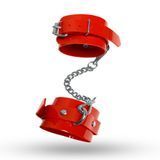
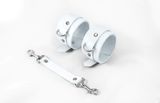
A first BDSM scene with restraints can bring up curiosity, arousal, nervousness and uncertainty all at once. Even when partners have discussed their fantasies and have a general idea of what they want to try, practical questions often remain: Where should you start? How much movement should be restricted? What needs to be monitored during the scene? And how should it end?
Feeling uncertain before a first experience is completely normal. What usually helps is not an elaborate script, but a clear sequence: agree on the format beforehand, choose simple BDSM restraints, inspect them before use, introduce restriction gradually and prepare a reliable way to release the restrained person quickly.
A first scene is not a test of obedience, endurance or the ability to tolerate discomfort. Its purpose is to explore, without pressure, how a person responds to cuffs, restricted movement, an exchange of control and the atmosphere of the scene itself.
This guide is a framework, not a mandatory script. Adapt each stage to the health, experience, comfort and agreements of everyone involved.
If you are new to the subject, start with our general BDSM guide for beginners.
What Is a BDSM Scene with Restraints?
A BDSM scene is a negotiated period of interaction in which partners explore a particular practice, role dynamic, sensation or consensual exchange of control. It is defined not by the number of toys involved or the level of intensity, but by shared intent, specific consent and a clear understanding of what is going to happen.
In a restraint scene, wrist cuffs, ankle restraints, straps or connectors can limit range of movement or help maintain an agreed body position. This may heighten feelings of vulnerability, trust, control or immersion in the roleplay.
At the same time, restricted movement reduces a person's ability to change an uncomfortable position, relieve pressure or free themselves quickly. Preparation is therefore part of the scene, not a formality that happens beforehand.
You do not need a complicated position or a complete set of accessories for a first experience with bondage. One properly fitted pair of cuffs and a short, predictable structure can teach you more than several unfamiliar devices used at once.
Before the Scene: Negotiation and Preparation
The scene does not begin when the first buckle is fastened. It begins with a conversation in which the partners define the desired format, boundaries, stop signals and release plan.
Define the Goal of the First Experience
Start by discussing why you want to use restraints. You may be interested in light restriction, roleplay, a consensual exchange of control, sensory play or simply learning how cuffs feel on the body.
Two people can imagine very different things when they hear “a scene with handcuffs.” For one person, it may mean briefly restraining the hands in front of the body. For another, it may suggest a more complex position, attachment to furniture or the use of additional devices. A general label does not replace a specific agreement.
Before the scene, discuss:
- which part of the body may be restrained;
- which position will be used;
- how much movement should remain available;
- which actions are desired, permitted or prohibited;
- whether additional devices or roleplay elements will be included;
- whether sexual contact is part of the scene;
- whether temporary marks on the skin are acceptable;
- when the scene should slow down or stop;
- what kind of aftercare each partner may need.
Nudity, sexual contact and orgasm are not automatic parts of a BDSM scene. Each requires separate consent.
Discuss Consent, Boundaries and Signals
Consent must be freely given, specific and informed, and it can be withdrawn at any time.
Agreeing to wrist cuffs does not automatically mean agreeing to ankle restraints, impact play, a gag, sex or any other activity. You can read more about the basic framework for these agreements in our guide to SSC in BDSM.
Choose an unambiguous way to stop the scene. This may be a safeword or a traffic-light system:
- green — everything is fine and the activity may continue;
- yellow — slow down, reduce intensity or check what needs to change;
- red — stop immediately and release the restrained person.
You also need a nonverbal stop signal. This is especially important if the body position, loud music or another element of the scene could make speaking difficult.
The signal might be a prearranged movement, a clear series of taps or an object that the restrained person can hold and drop to stop the scene. Whatever you choose, it must remain physically accessible in the planned position.
For a first experience, it is better not to combine restraints with a gag or another device that interferes with communication. If you do plan to include one, test the nonverbal signal separately before the scene begins.
Assess Physical and Emotional Readiness
Fatigue, illness, severe stress, injury or emotional overload can change how a person responds to pressure, body position and loss of control.
Before the scene, discuss general wellbeing, recent or existing injuries, mobility limitations, damaged skin and areas with reduced sensation.
Pay particular attention to previous injuries involving the wrists, shoulders, elbows, ankles and knees. Do not use a position that already causes pain or pronounced tension during ordinary movement.
If a person cannot clearly assess their sensations, make decisions or withdraw consent at any time, postpone the practice.
Emotional readiness matters just as much. Someone can genuinely want to explore restraints and still feel anxious about losing mobility. That is normal. The scene can be simplified, shortened or rescheduled.
Choose a Simple Restraint Setup
For a first experience, consider BDSM handcuffs or wrist cuffs with adjustable straps, a straightforward closure and a short, removable connector.
You can first try on each cuff separately without restricting the position of the hands, then add the connecting piece.
Ankle restraints are designed for a different circumference and pattern of joint movement, so wrist cuffs should not automatically be used around the ankles.
If you intend to combine several components, check the compatibility of their rings, carabiners and connectors before the scene.
A ready-made BDSM restraint kit can be convenient when you want cuffs and connecting pieces designed to work together. Owning a complete kit, however, does not mean every component needs to be used during the first experience.
When choosing restraints, assess:
- the actual adjustment range;
- the width and shape of each cuff;
- the smoothness of the inner surface;
- the quality of the finished edges;
- the position of buckles and rings;
- whether the closure remains accessible in the planned position;
- whether the connector can be removed quickly.
There is no universal fit rule that works for every design and every body. A cuff should remain stable without creating excessive pressure, pain or changes in sensation. Follow the stated size range of the specific model and keep asking the wearer for direct feedback.
Inspect the Equipment and Practice Removing It
Inspect the entire setup before use. The material should have no cracks, tears, sharp edges or hard, deformed areas. Check the stitching, rivets, buckles, rings, carabiners and every attachment point.
Fasten and release each cuff several times without applying load. Make sure each carabiner closes completely and that you can reach the buckle in the position you plan to use.
If the restraint has a lock, keep the primary and spare keys accessible throughout the scene.
Not All Restraints Are Designed to Support Body Weight
A metal ring, carabiner or sturdy-looking strap is not automatically rated to support a person's weight.
Do not use ordinary floor-based restraints for suspension or transfer body weight onto them unless the manufacturer explicitly identifies the product as suitable for that purpose and provides the relevant load rating.
Standard restraints and suspension equipment are not the same thing.
Prepare the Space and a Release Plan
For a first scene, choose a stable surface and a position with a low risk of losing balance.
Remove sharp objects, unstable furniture, glass and anything else the restrained person could accidentally strike.
Decide in advance who will remove each component and in what order. The release method should be simple and understood before the scene begins.
Never leave a restrained person unattended, even briefly.
During the Scene: Progress Gradually and Keep Monitoring
After preparation, the scene can begin with a simple question: “Are we ready to begin?”
A separate ritual is optional. What matters is that everyone involved understands the transition from negotiation to play.
Start with a Fit Check Before Restricting Movement
Put on one cuff and fasten it within the stated adjustment range of that model.
Ask the wearer to move their fingers and wrist, or their toes and foot. Instead of asking only “Are you okay?”, use more specific questions:
- Is there pressure on a bone or joint?
- Is the edge or buckle pressing anywhere?
- Is there any tingling, burning or numbness?
- Do all fingers or toes feel the same?
- Can you move them freely?
Then check the second cuff. Add a short connector only after the fit of both cuffs feels clear and comfortable.
For a first experience, keeping the hands in front of the body is generally easier to monitor, adjust and release than holding them behind the back for an extended period.
Behind-the-back restraint can place additional stress on the shoulders, elbows and wrists, especially when joint mobility has not been checked beforehand.
Increase Restriction Step by Step
Do not pull a connector suddenly or move someone from a free position into maximum restriction in one motion.
Give the body time to adapt, check the response after every change and alter only one variable at a time.
For example, first connect the cuffs, then adjust the position of the hands and only after that introduce one previously agreed additional element.
If position, tension, equipment and type of touch all change simultaneously, it becomes harder to identify the cause of discomfort.
Do not hold a joint at the limit of its natural range of motion. Avoid sudden pulls, and do not expect a person with restricted movement to maintain an unstable position without adequate support.
Monitor the Person Throughout the Scene
Do not check the fit only when the cuffs are first fastened.
A restraint can shift after movement, a turn of the body, a change in position or the addition of a connector.
Regularly assess:
- the color and temperature of the hands or feet;
- normal skin sensation;
- the ability to move fingers or toes;
- tingling, burning, numbness or pain;
- swelling;
- the position of edges, buckles and rings;
- breathing, speech, coordination and general condition.
Observation does not replace a direct question. A person may appear calm while already experiencing unwanted pressure or altered sensation.
Likewise, silence, stillness or a lack of resistance does not mean that everything is fine.
When to Stop and Release the Person Immediately
Stop the activity and release the person immediately if:
- a safeword is used or consent is withdrawn in another way;
- numbness or loss of sensation appears;
- the person experiences sharp, burning, shooting or “electrical” pain;
- unusual weakness develops or the person cannot move their fingers or toes normally;
- there is pronounced swelling or a noticeable change in skin color or temperature;
- dizziness, nausea, difficulty breathing or impaired coordination occurs;
- a cuff moves onto a joint, prominent bone or damaged area of skin;
- a closure breaks, an attachment loosens or another component becomes damaged;
- anyone involved no longer wants to continue.
Do not restart the scene merely because a symptom improves slightly after release.
If pain, numbness, tingling, weakness or altered sensation does not resolve, returns or becomes worse, seek medical evaluation.
Other Activities Are Optional
Restraint can be a complete practice on its own. You do not need to add impact play, wax, a gag, intense roleplay or sex to make the experience “real.”
If partners want to combine several activities, negotiate each one separately.
For a first scene, it is usually easier to keep familiar activities and add only one new form of restriction. Ideas for developing the experience later can be found in our beginner BDSM scene and roleplay ideas.
After the Scene: Release, Physical Checks and Aftercare
The end of the scene does not begin after every restraint has already been removed.
It includes the release itself, a return to a comfortable position, a physical check, the emotional transition and a later conversation.
Remove Restraints Without Sudden Movement
First, stop any additional activity and make sure the person's body is supported in a stable position.
Disconnect the connectors, loosen the cuffs and remove them in the agreed order.
If the hands have been behind the back or held in an unfamiliar position for some time, do not pull the arms suddenly forward.
After full release, check:
- whether sensation is the same in both hands or both feet;
- whether the person can move their fingers, toes and joints freely;
- whether there is pain, tingling, burning or numbness;
- whether normal skin color and temperature have returned;
- whether there is pronounced swelling or visible damage.
A faint cuff mark does not prove that the fit was appropriate. In the same way, the absence of a mark does not guarantee that there was no excessive pressure.
Evaluate the combination of sensation, mobility and tissue condition.
Aftercare Depends on the Individual
Aftercare helps partners move from the intensity of a scene back toward their ordinary state.
One person may want cuddling, a blanket, water and a calm conversation. Another may prefer a few minutes alone or a familiar, grounding activity.
The needs of the restrained partner and the partner who directed the interaction may be different.
Discuss aftercare in advance, then check again after the scene. A person's desire for touch, quiet or space can change during the experience.
Aftercare is not a reward for obedience and should not depend on how “well” someone performed a role. It is part of ending the interaction responsibly.
Emotional Responses May Appear Later
After a scene, some people experience fatigue, vulnerability, sadness, irritability or a stronger need for contact.
In BDSM communities, these changes may be described as sub drop, Dom drop or scene drop.
Do not automatically dismiss every change in mood as “drop.” Strong, persistent or concerning physical or emotional symptoms deserve appropriate attention and, when necessary, professional support.
Consider arranging a brief check-in the next day or a few days later. This creates space to discuss reactions that may not have been apparent immediately after the scene.
Debrief the Experience Calmly
A debrief is not the time to look for someone to blame or decide who performed their role “correctly.”
It is more useful to answer specific questions:
- What felt comfortable and predictable?
- When did tension or uncertainty appear?
- Was there enough feedback and communication?
- Were the closures and connectors easy to use?
- Should the size, position or duration change next time?
- Which actions would you like to repeat, and which should be avoided?
- Did the aftercare match everyone's actual needs?
One scene does not obligate the partners to repeat it or move toward greater intensity.
Deciding not to continue a particular practice is just as valid an outcome as wanting to try it again.
Inspect and Clean the Equipment
After use, inspect the cuffs, straps, edges, buckles, stitching, rivets, rings and carabiners.
Clean each item according to its material and let it dry completely before storage.
Do not use a restraint again if the material has torn, an edge has become sharp, a rivet has loosened, a buckle has deformed or a carabiner no longer closes securely.
A Simple Structure for a First BDSM Scene with Restraints
A first experience can be very simple. For example:
- The partners discuss the goal, boundaries, safeword, nonverbal stop signal and aftercare.
- They inspect the cuffs together and test the closures.
- They try on each cuff separately without restricting movement.
- They keep the hands in front of the body and add a short, removable connector.
- They check the fit, sensation, finger movement and general condition.
- They add one previously agreed element, such as simple instructions or light touch.
- They continue checking the wearer's condition and do not increase intensity automatically.
- They end the scene before pronounced fatigue or discomfort develops.
- They remove the connector and cuffs and check the hands again.
- They move into the agreed aftercare and discuss the experience later.
This is not a script that must be followed word for word. It simply shows the logic of introducing restraint gradually:
fit check → restriction → monitoring → one additional element → release → aftercare → debrief
Common Mistakes During a First Scene
- Introducing too many new elements. A complex position, wrist cuffs, ankle restraints, a gag and other unfamiliar devices used together make communication and monitoring more difficult.
- Restraining without a fit check. Check the size and position of each cuff before movement is limited.
- Failing to prepare a release method. Buckles, carabiners and keys must remain accessible.
- Pulling the connector suddenly. A sharp pull can unexpectedly change joint position and balance.
- Choosing by appearance alone. An attractive accessory may not suit the wearer's size, the planned configuration or its intended purpose.
- Ignoring tingling and numbness. These sensations should not be treated as a normal part of restraint.
- Having no nonverbal stop signal. The restrained person may be unable to say the safeword quickly.
- Leaving a restrained partner unattended. A person with limited movement may be unable to change position or release themselves.
- Using ordinary restraints around the neck or to support body weight. Standard wrist cuffs, ankle restraints and connectors are not designed for these purposes.
- Trying to “finish the scene.” Any plan can be changed or stopped at any time, without requiring an immediate explanation.
Frequently Asked Questions About a First BDSM Scene with Restraints
Which BDSM Restraints Are Suitable for Beginners?
Start with a simple adjustable design that has a clearly stated size range, a smooth inner surface, finished edges and an accessible closure.
One properly fitted pair of wrist cuffs with a short, removable connector is usually enough for a first experience with restraint.
How Tight Should Restraint Cuffs Be?
There is no universal distance or rule that applies to every cuff and every body.
The cuff should remain stable without slipping or creating excessive pressure. Follow the adjustment range of the specific model and continue checking sensation, finger or toe movement, skin color and temperature.
Can We Start with the Hands Restrained Behind the Back?
This position requires particularly careful assessment of shoulder, elbow and wrist mobility.
For a first experience, keeping the hands in front of the body is generally easier to monitor, adjust and release quickly. Do not force any joint beyond its comfortable range of motion.
How Long Should a First Scene Last?
There is no universally appropriate duration. It depends on the position, the construction and fit of the restraints, the person's condition and the ability to monitor their responses continuously.
For a first experience, it is more important to stop before pronounced fatigue or discomfort appears than to meet a predetermined time target.
Can Cuffs Be Attached to Furniture?
Do not use random handles, bed frames, rails or other furniture components without understanding their strength and risk of failure.
The attachment must not create a position in which the restrained person could fall, lose balance or experience a sudden jolt.
Floor-based restraints and decorative hardware are not designed to support body weight.
Is a Safeword Required?
You need an unambiguous way to stop the scene.
This may be a safeword, a traffic-light system or another prearranged command. Also prepare a nonverbal stop signal that remains available in the chosen position.
What Should I Do If Numbness Remains After Release?
Do not resume restraint.
If numbness, tingling, pain, weakness or altered sensation does not resolve, returns or worsens, seek medical evaluation.
Sudden or severe symptoms, impaired movement, breathing difficulty or loss of coordination require urgent medical attention.
Is Aftercare Necessary After a Mild Scene?
The need for aftercare does not depend only on physical intensity.
Even brief restriction or a role-based exchange of control can be emotionally significant. After the scene, check in about each person's physical and emotional state and choose a form of closure that feels comfortable for both.
A First Scene Should Be Clear, Not Complicated
A first BDSM scene with restraints does not require maximum immobility, a complex position or a large collection of devices.
Its foundation is specific consent, a simple setup, properly fitted cuffs, continuous feedback and an accessible release method.
Begin with one pair of restraints, check the response after every change and do not rush to increase intensity. After release, assess the person's physical condition, make space for aftercare and calmly discuss what you would repeat or change.
If you are choosing equipment for a first experience, explore the Feral Feelings restraint collection, compare wrist cuffs, ankle restraints, connectors and ready-made kits, and choose a configuration that matches your experience, measurements and intended type of play.