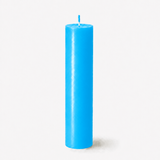
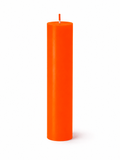
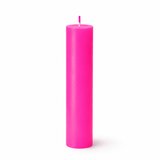
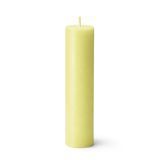
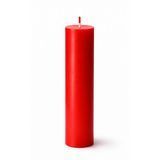
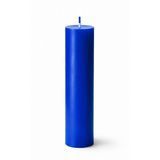
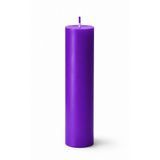
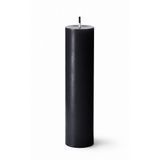
Wax play is a form of BDSM sensation play in which melted wax is applied to the skin in a controlled way, creating a combination of warmth, brief temperature contrast, and tactile sensation. Because the wax comes into direct contact with the body, the candle’s color and appearance are only part of the picture. Its ingredients, melting range, fluidity, cooling rate, and texture after hardening all matter.
Regular household, decorative, and scented candles are designed to provide light, fragrance, or visual ambience. Their manufacturers do not necessarily formulate or test them for applying melted wax to skin. As a result, two candles that look almost identical may behave very differently when lit: they can have different melting ranges, additives, drop sizes, and heat intensity.
The main difference between wax play candles and regular candles is not simply the label or design. A purpose-made wax play candle is formulated for a specific type of use. Its wax blend, melting range, shape, and dripping behavior are selected with wax play in mind. Even a specialized candle, however, does not eliminate every risk. Wax play still requires careful technique, a preliminary test, and continuous communication between partners.
Can You Use Regular Candles for Wax Play?
A regular candle should not be considered suitable for wax play simply because it is made from paraffin or soy wax, or because it looks similar to a dedicated wax play candle. If the manufacturer does not identify the product as suitable for wax play and does not provide its ingredients or melting range, it can be difficult to predict how the melted wax will behave on skin.
A household candle may contain:
- wax or a wax blend with an unknown melting range;
- stearin or other ingredients that alter hardness and melting characteristics;
- fragrance blends or essential oils;
- colorants, glitter, decorative particles, or surface coatings;
- additives intended to affect burning performance, preserve the candle’s shape, or intensify its scent;
- a wick selected for lighting and fragrance diffusion rather than controlled dripping.
Wax that looks the same is not necessarily made from the same formula. Even two paraffin candles or two soy candles can differ in their additives, hardness, viscosity, and melting range. Statements such as “it is just paraffin” or “it is natural wax” therefore do not provide enough information to determine whether a candle is appropriate for wax play.
Before using any candle, you should know at least its intended purpose, main ingredients, stated melting range, manufacturer instructions, and relevant limitations. If this information is unavailable, it is better not to experiment with a household candle and instead choose a product specifically developed for wax play.
If you are new to temperature play, begin with our complete wax play guide for beginners. It covers preparation, communication, suitable body areas, and fundamental precautions in greater detail.
The Main Difference: Melting Range
The melting range describes the temperature range in which a solid wax blend transitions into a liquid state. For a candle intended for wax play, this is one of the key characteristics to compare. In general, candles with a higher melting range can produce a more intense thermal sensation, but the actual sensation also depends on how the wax is applied and how the skin responds to it.
The melting range is not the exact temperature of every drop when it reaches the skin. Liquid wax near the wick can continue to heat after it has melted. The actual sensation is also affected by:
- how long the wax has remained in the melted pool;
- the distance between the candle and the body;
- the size and volume of each drop;
- how quickly the drop cools as it falls;
- room temperature and air movement;
- the body area and its sensitivity;
- the number of layers applied to the same spot;
- the individual’s response to heat.
The temperature range listed on a product page is useful for comparing candles, but it does not guarantee an identical sensation for every person or every application. Before beginning a full scene, allow the candle to form a stable pool of melted wax, apply one controlled test drop to a small area of intact skin, and assess the response.
Feral Feelings candles are divided into temperature ranges according to intensity. For example, the low-temperature wax play candle melts at 45–50°C (113–122°F) and provides a gentler heat sensation. The Classic wax play candle melts at 55–60°C (131–140°F), producing a more pronounced temperature contrast. The collection also includes UV candles in the 50–55°C (122–131°F) range and Strong! candles at 60–65°C (140–149°F) for people with relevant experience.
A higher melting range does not mean that a candle is better or of higher quality. It represents a different level of intensity, which should be chosen according to experience, individual sensitivity, and the agreed format of the scene.
Wax Composition: What Changes from One Candle to Another?
The name of the main wax tells you only part of the story. A finished candle’s properties depend on the grade and refinement of the wax, the proportions used in the blend, and any colorants, fragrances, stabilizers, or other ingredients added to the formula.
Paraffin Wax
Paraffin is widely used in both household candles and specialized wax play candles. It holds its shape well, can melt evenly, and can form distinct drops. Once cooled, paraffin-based wax usually hardens, which may make it easier to remove in larger pieces.
The word “paraffin,” however, does not describe a candle’s precise characteristics. Different grades of paraffin have different melting ranges. Stearin, other waxes, and processing additives may make a blend harder, hotter, more brittle, or more viscous. A regular paraffin candle is therefore not automatically suitable for wax play.
Soy Wax and Other Plant-Based Waxes
Soy wax often has a relatively low melting range and a softer texture, although its properties vary depending on the specific formulation. It is widely used in decorative, scented, and massage candles.
A massage candle and a wax play candle are not the same product. Massage candles are typically formulated to create a warm, oil-like mixture that can be spread over the body, whereas wax play candles are designed to produce controlled drops and a distinct temperature contrast.
Coconut, rapeseed, and other plant-based waxes can also vary in hardness, melting range, fluidity, and texture after cooling. The word “natural” does not reveal how hot a drop may feel, whether the cooled wax will be easy to remove, or whether the candle contains fragrances and other additives.
Wax Blends
Manufacturers combine different waxes to achieve a particular balance of melting range, hardness, flexibility, and flow. A carefully developed blend can help a candle melt evenly, create defined drops, and form flexible pieces that separate from the skin after cooling instead of smearing excessively.
Feral Feelings wax play candles, for example, use a blend of paraffin and soy wax. The formula is developed to provide a defined melting range, even melting, and a flexible texture after the wax has cooled.
Using a blend does not automatically make a candle better or worse. What matters is whether the manufacturer clearly states the product’s intended use, principal ingredients, and melting characteristics.
Fragrances, Colorants, and Other Additives
Temperature is not the only factor to consider when melted wax comes into contact with skin. Regular scented candles may contain complex fragrance blends, essential oils, scent stabilizers, concentrated pigments, and decorative particles.
An ingredient that is suitable for fragrancing a room or coloring a candle is not necessarily intended to be applied to the body in hot wax. A reaction to an additive may occur separately from the heat response and can include itching, a rash, persistent redness, or burning.
Take particular care with:
- heavily scented candles;
- products containing essential oils in an unknown concentration;
- candles containing glitter, dried flowers, coffee, spices, or other inclusions;
- decorative coatings and metallic finishes;
- homemade blends without established proportions;
- products with an incomplete or unknown ingredient list.
Even a “hypoallergenic” label cannot guarantee that no individual reaction will occur. Before using a new candle in a full scene, review its ingredients and test one drop on a small area of intact skin.
Do not apply wax to skin that is already irritated, broken, inflamed, or unusually sensitive.
How Does the Wax Behave on Skin?
The difference between candles is not limited to the moment a warm drop lands. The formula also affects how the wax flows, spreads, cools, builds into layers, and comes away after the scene.
Fluidity
A thinner liquid wax may spread quickly across a larger area, while a more viscous wax may form thicker, more rounded drops. This changes both the pattern on the skin and the area and duration of thermal contact.
Drop Size
The wax formula, candle diameter, size of the melted pool, wick, and angle of the candle can all affect drop size. A large drop carries more melted material than a small one and may therefore retain heat for longer.
Cooling Rate
Small, separate drops cool more quickly than large pools or thick layers. Applying fresh wax over a layer that has not yet cooled can allow heat to accumulate. Avoid repeatedly dripping wax onto the same spot without pausing and checking the skin.
Texture After Cooling
Some wax blends become hard and brittle, while others remain flexible or oily. This affects both the sensation of the hardened wax and the cleanup process.
Feral Feelings candles form flexible pieces that can be gently lifted away after the wax has cooled completely.
Never remove wax before it has fully cooled, and do not use knives, metal scrapers, or forceful pulling. For a detailed cleanup process, read How to Remove Wax After Wax Play.
Does the Candle’s Design Matter?
The candle’s physical design affects how easily you can control the flame, the amount of melted wax, and the direction of each pour. Important features for wax play include:
- candle diameter and length;
- the relationship between wick size and candle diameter;
- how quickly the melted wax pool forms;
- stability while burning;
- ease of holding and tilting the candle;
- visibility of the flame, candle edge, and target area;
- the distance between the hand, flame, and partner’s body.
An excessively thin candle may release wax in fast, uneven streams, while an unsuitable wick may create an overly large or unstable pool of melted wax. Tea lights, candles in glass containers, and elaborate decorative shapes may also be difficult to use for controlled application.
Feral Feelings wax play candles have a shape designed to be held and tilted during wax play. Standard models weigh 200 g (7 oz), measure 16 cm (6.3 in) in length, and have a diameter of 3.5 cm (1.4 in). Always check the specifications on the individual product page before use.
Regardless of candle design, keep the flame away from skin, hair, fabric, and other flammable materials. Never leave a burning candle unattended.
Wax Play Candles vs. Regular Candles: A Comparison
| Feature | Regular candle | Wax play candle |
|---|---|---|
| Primary purpose | Lighting, fragrance, or decoration | Controlled wax application during wax play |
| Formula | May be disclosed only in general terms and designed for household use | Developed around the intended use and desired wax properties |
| Melting range | Often not stated and may vary significantly | One of the main specifications of the individual candle |
| Fragrance | Common in many products | Depends on the model; ingredients should be known before use |
| Colorants and decoration | May include concentrated pigments, coatings, glitter, or inclusions | Components are selected with the product’s intended use in mind |
| Dripping behavior | Usually not a design priority | Melting, flow, and drop formation are considered during development |
| Behavior after cooling | May crumble, smear, or be difficult to remove | Cooling and removal characteristics are considered during development |
| Shape | Designed to burn on a holder or inside a container | Designed for more controlled holding and tilting |
| Instructions | Focus on lighting, fragrance, and fire safety | Should include melting range, intended use, and relevant precautions |
| Predictability | Depends on properties that may not be provided | Greater when product specifications and instructions are available |
This comparison does not mean that every product labeled “wax play” is automatically well made, or that all household candles are identical. You should still assess the specific candle rather than relying on the category name alone.
Why “Low Temperature” Does Not Mean “Completely Safe”
A low-temperature wax play candle has a gentler melting range than hotter models, but it does not remove the possibility of a burn, irritation, or unwanted pain. The sensation depends on the entire method of application, not only the wax formula.
Intensity is affected by:
- distance from the body;
- drop volume;
- frequency of application;
- the number of layers on one area;
- sensitivity of the selected body part;
- skin condition and temperature;
- individual perception of heat;
- how long the melted wax has been heating near the flame.
Begin with one small test drop and a greater pouring distance. Do not apply wax to the face, eyes, mucous membranes, genitals, broken or irritated skin, fresh tattoos, or areas with reduced sensation.
Do not use a candle if the receiving partner cannot clearly assess the sensation or communicate a change in condition.
Stop immediately if the person experiences sharp or increasing pain, persistent burning, blistering, skin damage, or any other unwanted symptom. A lower stated melting range is never a reason to continue through a concerning reaction.
How to Choose a Wax Play Candle
Do not choose a candle based only on color, scent, or the word “natural.” Review its practical characteristics in a consistent order.
- Check the intended use. The product page or packaging should clearly state that the candle is made for wax play or BDSM temperature play.
- Review the ingredients. Identify the main waxes and check for colorants, fragrances, and other additives.
- Compare the melting range. Match the stated range to your experience and preferred intensity.
- Consider fragrances and colorants. If you have sensitive skin, avoid unknown fragrance blends and decorative inclusions.
- Read the manufacturer’s instructions. Check the recommended method, limitations, storage guidance, and any product-specific precautions.
- Assess the candle’s shape. It should be comfortable to hold, tilt, and control without bringing the flame close to the body.
- Account for individual sensitivity. For a first experience, choose a lower-temperature candle and do not aim for maximum intensity.
- Test every new product. Before a full scene, place one controlled drop on a small area of intact skin and evaluate both the sensation and the skin’s response.
For beginners, the clearest choice is usually a candle with a clearly stated purpose, known ingredients, a lower melting range, and straightforward instructions. Even wax play candles for beginners should be introduced gradually and used only with the informed, voluntary consent of everyone involved.
Why Is a Purpose-Made Wax Play Candle the Better Choice?
The primary advantage of a specialized candle is that it reduces the number of unknown variables. You do not have to guess at the blend’s melting range, how it will flow, or whether the candle’s design is suitable for controlled pouring.
A purpose-made wax play candle should provide:
- a clearly defined intended use;
- a stated melting range;
- information about its main ingredients;
- more predictable flow and cooling behavior;
- a shape suited to wax play;
- product-specific instructions;
- an intensity level that can be compared with other models.
This is particularly valuable for beginners who do not yet know how their body responds to thermal stimulation. Rather than experimenting with an unknown household candle, they can select a lower melting range and explore the sensations gradually.
Feral Feelings develops and makes wax play candles in its own workshop in Ukraine. The collection includes candles with melting ranges of 45–50°C (113–122°F), 50–55°C (122–131°F), 55–60°C (131–140°F), and 60–65°C (140–149°F), including low-temperature, Classic, UV-reactive, and Strong! lines.
Each product page provides information about the candle’s ingredients, melting range, dimensions, weight, and instructions.
A specialized product is not a substitute for preparation. Consent, a test drop, controlled distance, observation of the skin, and continuous feedback remain essential regardless of the candle you choose.
Conclusion
Wax play candles differ from regular candles in more than their appearance or name. Their intended use, wax composition, melting range, additives, fluidity, cooling rate, hardened texture, and physical design can all affect the experience.
A regular decorative or scented candle is not automatically an alternative to a purpose-made wax play candle, even if the two look alike or contain the same general type of wax. Without information about the finished formula and manufacturer guidance, you cannot reliably predict its temperature or behavior on skin.
A specialized candle with clearly stated characteristics makes it easier to choose an appropriate intensity and reduces the number of unknown factors. No formula, however, makes wax play risk-free.
Begin gradually, test the product, monitor the skin’s response, communicate throughout the scene, and stop immediately if any unwanted sensation or reaction develops.
Explore the Feral Feelings wax play candle collection, compare melting ranges, colors, and product specifications, and choose a candle that matches your experience and preferred intensity.